

 FileGrant
 RemoteGrant
 Connector
 AIGrant
 EmailGrant
 SecretGrant
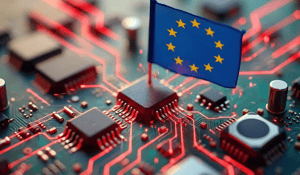
Europe is accelerating its push for technological autonomy. Governments and public administrations are reducing their dependence on large non-European vendors, trialling open source suites and investing in digital infrastructure they control directly.
In October 2025 Schleswig-Holstein, a German federal state, let its Microsoft 365 licences expire for more than 40,000 civil servants and officials, starting the move to LibreOffice and openDesk. The project cost roughly 9 million euros as a one-off, against annual licence spending of about 15 million. Over the same period the German federal government spent 481 million euros on Microsoft licences, 76% more than two years earlier (Irish Times, February 2026).
This is not an isolated case. Denmark, Austria and France are pursuing comparable initiatives, aiming to strengthen control over the technologies their administrations use and over how data is handled.
It is an important direction. Reducing technological dependencies, keeping data under European jurisdiction and being able to choose the infrastructure that runs public digital services are strategic goals. This shift also opens a question that deserves more attention: once you have decided where to keep your documents and which tools to use, how do you make sure those documents are actually protected?
Digital sovereignty should not stop at the choice of vendor. It should become the moment to strengthen information protection as well.
Key takeaways
- Germany, Denmark, Austria and France have started programmes to reduce their dependence on non-European proprietary suites and strengthen control over their own digital infrastructure.
- The European Data Protection Supervisor's ruling on the European Commission's use of Microsoft 365 highlighted issues with the handling of personal data and with transfers outside the European Economic Area.
- The incidents involving Microsoft in recent years showed how much digital identity security, credential management and the protection of document environments matter.
- Moving to a European or open source platform can increase control over the infrastructure, and it does not automatically guarantee the confidentiality of documents. Localisation, access management and encryption are complementary layers.
- FileGrant, the CyberGrant file-centric platform, and Connector, its extension for Microsoft 365, add protection directly to the document and keep it in place when the file is shared or moved outside the corporate environment. Connector brings this model into SharePoint and OneDrive with no migration required.
- The same attention has to extend to artificial intelligence tools: AIGrant, the private AI extension integrated into FileGrant, applies document access permissions during the retrieval step that produces an answer, not only when a user opens a file.
Where does digital sovereignty stand in Europe?
The move towards European and open source tools is no longer only a matter of political debate. Several administrations have already launched concrete projects, with different timelines, costs and outcomes.
Germany. Schleswig-Holstein is one of the most advanced cases. In October 2025 more than 40,000 users left Microsoft 365 for LibreOffice and openDesk, the suite developed by the state-owned centre ZenDiS. The state's digital minister, Dirk Schrödter, linked the decision to the need for greater control over systems and infrastructure. The federal chancellery has also begun moving to openDesk.
Denmark. The Ministry of Digitalisation, led by Caroline Stage, started replacing Microsoft Office with LibreOffice. The move follows initiatives already taken by cities such as Copenhagen and Aarhus. According to figures gathered by Version2 in 2024, Danish municipal IT spending on Microsoft rose from 313 million kroner in 2018 to 538 million in 2023. In Aarhus, head of digital services Bo Fristed said his department's annual cost fell from 800,000 to 225,000 kroner, while acknowledging that part of the staff experienced the change as a downgrade in day-to-day tooling.
Austria. The Austrian armed forces converted 16,000 workstations from Microsoft Office to LibreOffice. The plan dates back to 2020, operational planning to 2022, and the project was presented at the LibreOffice Conference in September 2025. The stated reasons include digital sovereignty, infrastructure independence and keeping data processing in house.
France. DINUM, the interministerial directorate for digital affairs, is building out La Suite numérique, a set of collaboration tools for public administrations. It includes Docs and Visio, developed to offer an alternative to the proprietary platforms used in the workplace.
EU institutions. The Union's own institutions have addressed the issue directly. On 8 March 2024 the European Data Protection Supervisor (EDPS) closed an investigation into the European Commission's use of Microsoft 365, finding infringements of Regulation (EU) 2018/1725. The issues included transfers of personal data outside the European Economic Area without adequate safeguards, and insufficient contractual precision about which data was collected and for what purposes. The Commission was required to address those data flows by 9 December 2024.
These initiatives have different drivers: cost, technological autonomy, regulatory compliance, infrastructure control and operational continuity. The common thread is a reluctance to delegate decisions about strategic services and information entirely to an external vendor.
It is a legitimate goal. Choosing a platform, however, is only part of the work.
What are the three levels of digital sovereignty?
Discussions of digital sovereignty tend to focus on data location: which country holds the servers? Which company runs the service? Which law applies? Who can act on the infrastructure?
These are fundamental questions, and they do not exhaust the problem.
To judge how much control an organisation really has over its information, it helps to separate three levels:
- Infrastructure sovereignty: where the data sits, who runs the systems and which jurisdiction the vendor answers to.
- Access sovereignty: who can enter the document environment, with which privileges, and through which authentication and control mechanisms.
- Content protection: who can actually read the information, including when the file is copied, shared or reached through unauthorised access to the infrastructure.
The three levels are complementary. A European platform can offer stronger guarantees on jurisdiction and data handling. A sound identity and authorisation architecture can limit access. If a document is not protected by adequate encryption, however, and the keys are not under the organisation's control, privileged access to the environment hosting it can still expose the content.
This holds regardless of where the server sits. European localisation does not automatically make a document unreadable to anyone who reaches the systems that store it.
This is where protection has to take a further step: travelling with the data itself, on top of defending the infrastructure perimeter. It is the same diagnosis that makes the classic perimeter model insufficient, as we set out in the article on why traditional DLP is obsolete.
Which incidents reopened the debate about dependence on Microsoft?
The digital sovereignty discussion has also been fuelled by a series of incidents involving Microsoft and its ecosystem. These are not equivalent events: some affected customer accounts and data, others the vendor's own internal environment, others still vulnerabilities in SharePoint deployments managed directly by organisations.
Taken together, they show how important it is to avoid entrusting document security to a single layer of control.
July 2023: Storm-0558 and the compromise of Exchange Online mailboxes
A group attributed to China obtained a Microsoft signing key and used it to mint valid access tokens for Exchange Online. The attack gave access to the email of roughly 25 organisations, including US government departments.
In April 2024 the US Cyber Safety Review Board published its report on the intrusion, calling it preventable and identifying a series of errors and shortcomings in the company's security culture.
The case showed what can follow from the compromise of a central component in the identity and authentication infrastructure of a major cloud vendor.
January 2024: Midnight Blizzard and the vendor's internal environment
A group attributed to Russian intelligence gained access to Microsoft corporate email accounts. In the following weeks the activity also involved portions of source code and secrets shared between Microsoft and some customers.
Here the perimeter initially compromised was the vendor's, not the customers' infrastructure. In April 2024 CISA issued an emergency directive for US federal agencies, requiring them to analyse potentially exposed correspondence and reset affected credentials.
The episode highlighted an important point: an organisation's security can be affected by what happens inside the environment of the party supplying its services and technology.
July 2025: ToolShell and the SharePoint Server vulnerabilities
In July 2025 a vulnerability chain known as ToolShell, which includes CVE-2025-53770, was actively exploited against on-premise SharePoint Server deployments. More than a hundred organisations were reported compromised, public administrations among them.
The case matters because it also concerns environments managed directly by organisations. A patch resolves the vulnerability, and it does not automatically remove any access attackers have already obtained, nor the consequences of an earlier compromise. We reconstructed the sequence in our Cold Case on ToolShell.
Security, then, cannot rest on platform protection alone: it has to account for what happens to the documents held inside it.
September 2025: the Entra ID vulnerability
Researcher Dirk-jan Mollema documented CVE-2025-55241, scored CVSS 10.0. The issue concerned an authentication mechanism between Microsoft services and, under the conditions the researcher described, allowed impersonation of users in other tenants, including Global Admin accounts, starting from a test tenant.
Microsoft remediated the vulnerability quickly. No exploitation in production has been reported.
Two technical properties drew particular attention: the mechanism could bypass Conditional Access, and the activity produced no logs in the potential victim's tenant. These raised questions about the visibility and control individual organisations can exercise over authentication mechanisms run by the vendor.
An incident of this kind does not demonstrate a compromise of corporate documents. It says something else: identity, authorisation and traceability are essential components of document governance, and their management deserves direct verification rather than wholesale delegation.
Does moving to a European suite protect corporate documents?
For many public administrations, moving to a European or open source suite is a strategic choice. For private companies a full migration can be a complex project, particularly where years of work, certified processes, integrations and document archives have been built around Microsoft 365.
The European cases show that change is possible, and that it takes time, investment and an adoption path. Schleswig-Holstein spent roughly five years and 9 million euros moving more than 40,000 workstations. Austria began planning the project in 2020 and presented it in 2025. In Aarhus, the change also meant dealing with resistance from part of the staff.
Not every organisation can take on a project of that scale in the short term. That does not mean they should postpone strengthening how their data is protected.
There is a fundamental distinction here: migration changes the platform that hosts the documents; protecting the content changes the conditions under which those documents can be read and used.
The two can proceed together, and neither replaces the other.
A document held in a European data centre benefits from the guarantees that infrastructure and the applicable jurisdiction provide. To protect the confidentiality of the content even in the event of unauthorised access, however, a further layer is needed: encryption that keeps key control with the organisation and that does not lapse when the file leaves the perimeter where it was created.
This matters most for information that has to stay confidential for many years: contracts, patents, industrial projects, medical records, financial data and strategic dossiers. Such content can hold value well beyond the useful life of the infrastructure it was stored on.
It is also the context in which the harvest now, decrypt later risk becomes relevant: data taken today and kept in the expectation of decrypting it later, once computing power and cryptographic tools have changed.
According to IBM's Cost of a Data Breach Report 2026, 37% of organisations involved in a breach encrypted sensitive data both at rest and in transit. The same report estimates that the presence of encryption reduces the average cost of a breach by 213,478 dollars.
Encryption does not prevent every incident. It reduces the exposure of information when the other layers of defence are overcome. For that to happen, key management has to be designed in line with the organisation's security model.
How do FileGrant and Connector protect documents on any platform?
This principle is the basis of the CyberGrant file-centric approach.
FileGrant is the CyberGrant platform that protects documents directly. The file is encrypted at creation with quantum-safe algorithms based on CRYSTALS-Kyber, standardised by NIST as FIPS 203 in August 2024. Protection stays bound to the document when it is copied, shared or moved outside the corporate network.
The organisation keeps control of authorisations: it can set who is allowed to open the file, revoke access after sharing, and review openings through an audit trail.
This model adds a layer of protection to the content without tying it to a specific storage platform.
For companies running Microsoft 365, Connector, the FileGrant extension for the Microsoft ecosystem, brings the same protection directly into SharePoint and OneDrive, with no migration and no replacement of the tools already in use.
In practice:
- Documents stay in SharePoint and OneDrive libraries. Users keep their Microsoft login and their normal workflows.
- Files are encrypted automatically with quantum-safe algorithms.
- Keys stay under the organisation's control, under a zero-knowledge encryption model: the content is not readable by Microsoft tenant administrators who do not hold the necessary authorisations and keys.
- Documents open only from authorised devices.
- Protection extends to non-Office formats, which may fall outside the coverage of Microsoft Purview protection labels.
- Encrypted content is not readable by Copilot or other AI tools that do not hold the necessary authorisations and keys.
Connector does not replace SharePoint, OneDrive or Purview. It sits alongside the tools already in place and adds persistent content protection, keeping the keys under the organisation's control. The operational detail is in the article on how to encrypt SharePoint files without replacing it or migrating.
This makes it possible to act on document protection now, without waiting for an infrastructure migration. And it still holds if the company later decides to move to a European platform.
How does data sovereignty extend to artificial intelligence? The role of AIGrant
The question no longer concerns document suites alone. As AI assistants spread, control over information extends to how documents are searched, retrieved and used to generate answers.
An AI assistant connected to corporate archives can make information far more accessible and productive. It also introduces a new point of attention: access permissions have to be respected not only when a user opens a document directly, but also when the AI system retrieves it to build an answer.
Setting out which documents a user may consult is therefore not enough. It is necessary to verify that the same limits apply throughout the retrieval process.
According to IBM's 2026 report, 92% of AI-related breaches involved systems without adequate access controls, and 68% of the organisations involved in a breach had no AI governance policy.
AIGrant is the private AI extension integrated into FileGrant. It indexes and classifies corporate documents and allows them to be queried in natural language through a private RAG system, without exposing content to public models.
The central point is how authorisations are handled: AIGrant applies FileGrant RBAC permissions while retrieving documents, before composing the answer. A user therefore cannot obtain, through the assistant, information held in a file they are not authorised to open.
In an on-premise installation, documents, index and model stay on company servers. In the cloud version, the model runs in Europe. Classification agents can be configured to the organisation's own criteria and activity is recorded in the logs. The architectural level is covered in the technical guide to on-premise enterprise RAG.
Here too AIGrant sits alongside existing tools, Copilot included, and offers a controlled environment for the cases where corporate information cannot be exposed outside the perimeter the organisation has defined.
Where does a CIO start for a complete digital sovereignty strategy?
For a CIO, the move towards greater technological autonomy should come with a concrete review of how documents are protected. Five steps help set priorities.
- Separate the platform choice from control over the data. Assess where information is held, who runs the infrastructure and who can reach the content. These are connected questions, and they do not coincide.
- Identify the documents that must stay confidential over time. Contracts, patents, medical data, industrial projects and strategic information can hold value for ten or twenty years. They weigh most in assessing harvest now, decrypt later risk and the adoption of quantum-safe algorithms.
- Check who controls the encryption keys. Encryption offers concrete protection when keys are managed independently of the infrastructure hosting the documents and stay under the organisation's control.
- Extend protection to the documents already in place. There is no need to wait for a migration. A layer of persistent encryption can be added to existing archives, including SharePoint and OneDrive environments.
- Apply the same rules to AI tools. Before connecting an assistant to corporate archives, verify that permissions are enforced during retrieval and that sensitive documents are not exposed to unauthorised systems.
Digital sovereignty does not end with migration
European initiatives to reduce technological dependence are an important step. Strengthening control over infrastructure, choosing vendors that fit regulatory and strategic requirements, and developing European alternatives are goals worth pursuing.
Digital transformation also offers the chance to address a broader problem: effective control over information.
The question covers where a document sits, which platform hosts it and, above all, who can read it, with which authorisations, and what happens if someone reaches the infrastructure.
Migration can change where the data lives and which party the organisation depends on. Protecting the content adds a further layer: it keeps the document confidential even when the technological perimeter is no longer enough to protect it. That is the approach behind our file-centric data loss prevention solutions.
European digital sovereignty is welcome. Let us take the chance to go one step further: beyond choosing where to keep the data, let us make sure it stays protected wherever it goes.
FAQ
What is digital sovereignty and why are European governments leaving Microsoft?
Digital sovereignty is the ability of an organisation or a state to control the infrastructure, data and technologies its services depend on. In Europe this has translated into concrete projects: in October 2025 Schleswig-Holstein let Microsoft 365 licences expire for more than 40,000 workstations, moving to LibreOffice and openDesk; the Danish Ministry of Digitalisation began replacing Microsoft Office; the Austrian armed forces converted 16,000 workstations; and France is developing the state suite La Suite numérique. On 8 March 2024 the European Data Protection Supervisor found infringements of Regulation (EU) 2018/1725 in the European Commission's use of Microsoft 365.
Does moving to a European or open source platform protect corporate documents?
Migration increases control over the infrastructure and the applicable jurisdiction, and those are legitimate goals. Confidentiality of the content, however, depends on a different layer: if a document is not encrypted and the keys are not under the organisation's control, privileged access to the environment hosting it can expose the content, whatever country the server sits in. According to IBM's Cost of a Data Breach Report 2026, 37% of organisations involved in a breach encrypted sensitive data both at rest and in transit, and the presence of encryption reduces the average cost of a breach by 213,478 dollars.
What are the three levels of digital sovereignty?
The first is infrastructure sovereignty: where the data sits, who runs the systems and which jurisdiction the vendor answers to. The second is access sovereignty: who can enter the document environment, with which privileges and through which authentication mechanisms. The third is content protection: who can actually read the information, including when the file is copied, shared or reached through unauthorised access to the infrastructure. The three levels are complementary and none replaces the others.
Which security incidents have involved Microsoft in recent years?
Four episodes fuelled the debate. In July 2023 the Storm-0558 group used a Microsoft signing key to access Exchange Online mail at roughly 25 organisations, including US government agencies; in April 2024 the US Cyber Safety Review Board called the intrusion preventable. In January 2024 the Midnight Blizzard group accessed Microsoft corporate email accounts and portions of source code, prompting a CISA emergency directive for federal agencies. In July 2025 the ToolShell chain (CVE-2025-53770) hit more than a hundred organisations running on-premise SharePoint Server. In September 2025 CVE-2025-55241 in Entra ID, scored CVSS 10.0, was remediated quickly by Microsoft, and no exploitation in production has been reported.
What is CyberGrant Connector and how does it work inside SharePoint?
Connector is the extension of FileGrant, the CyberGrant file-centric platform, that brings quantum-safe document encryption into SharePoint and OneDrive with no migration required. Files stay in the existing libraries, users keep their Microsoft login and usual workflows, and every uploaded document is encrypted automatically with CRYSTALS-Kyber, standardised by NIST as FIPS 203 in August 2024. Keys stay under the organisation's control under a zero-knowledge model, documents open only from authorised devices, and protection also covers non-Office formats that may fall outside Microsoft Purview labels.
Does Connector replace SharePoint, OneDrive or Microsoft Purview?
No. Connector sits alongside the tools already in use and adds persistent content protection. Purview sensitivity labels govern classification and policy inside the Microsoft ecosystem; Connector keeps encryption keys under the organisation's control, extends protection to non-Office formats and prevents AI tools, Copilot included, from reading encrypted documents without the necessary authorisations and keys. The two technologies coexist in the same tenant.
How are access permissions applied when an AI assistant reads corporate documents?
Control cannot stop at the moment a user opens a file: the same limits have to apply when the AI system retrieves documents to build an answer. According to IBM's 2026 report, 92% of AI-related breaches involved systems without adequate access controls and 68% of the organisations involved had no AI governance policy. AIGrant, the private AI extension integrated into FileGrant, applies RBAC permissions during document retrieval, before composing the answer, so that a user cannot obtain from the assistant information held in a file they are not authorised to open. In an on-premise installation, documents, index and model stay on company servers.
Sources
- Irish Times, A small German state's quiet revolt against Microsoft, 14 February 2026
- The Local Denmark, Danish cities drop Microsoft, 3 June 2025 (spending figures: Version2, 2024)
- The Document Foundation, Austria's military switches from Microsoft Office to LibreOffice, 30 September 2025
- EDPS, European Commission's use of Microsoft 365 infringes data protection law for EU institutions and bodies, 11 March 2024
- Cyber Safety Review Board, Review of the Summer 2023 Microsoft Exchange Online Intrusion, April 2024
- CISA, Emergency Directive 24-02, April 2024
- Microsoft Security Response Center, CVE-2025-53770 and CVE-2025-55241
- IBM, Cost of a Data Breach Report 2026